One of the interesting and—dare I say it—fun things about developing your own pagan practice is deciding what holy days you will mark and how to celebrate each occasion. Just choosing which days to observe—never mind the how—there exists a dizzying array of choices. Odds are that you will not observe exactly the same holidays as another pagan in your social circle, even if you nominally follow the same tradition. (If you doubt me, just look up the Anglo-Saxon and Norse heathen debates on the correct dating of Gēol/Yule). Because of this, I think it is important to note that you do not have to observe every holiday ever conceived of. You do not have to observe a holy day just because it has historical attestation, nor because it’s what “all the other [x] pagans do.”
Personally, I don’t celebrate all the holidays on the common Wheel of the Year, nor all the holidays you might find listed by various heathen organizations. My big holidays for the year are as follows:
- Ēosturdæg
- Midsumor
- Winterfylleþ
- Módraniht/Gēol
I list Modraniht and Gēol together because Modraniht is very much a subsection of the ongoing Gēol festivities for me that take up the entire month of December. In fact, you could almost say that Winterfylleþ kicks off my Gēol season, and Modraniht is my early New Year. But as you can see, this is a very abbreviated calendar compared to other lists you may find. They also line-up in time and culture with big observances going on around me: Easter, Halloween, and Christmas. Which brings me to my next point…
Modern Observances
It’s also okay to weave in wholly modern observations. Sometimes the old holy days just don’t quite line up with the schedules and rhythms of our modern lives, especially for those of us who aren’t deeply connected to agriculture. Incorporating our heathenry into holidays our culture is already celebrating is a great way to start knitting these pieces of our identities together. For example, I have been trying to work the secular Earth Day into my own spiritual calendar. Is there an attested Eorthedæg in Anglo-Saxon heathenry? Not that I’m aware of. But there’s certainly enough precedence for the worship of an Earth Mother. To me, it makes sense to dedicate time to this important figure, and lining it up with a pre-existing modern secular holiday makes sense.
Here’s some ideas for other modern holidays (as observed in the US) that you could give a heathen spin:
Earth Day – A húsel or blot to Eorthe or another earth mother goddess is an obvious option. Perhaps less obvious is signing up for some volunteer opportunities and showing the goddess your love through service. Park cleanups and tree plantings can be fun events that help tie you not only to the Earth, but also to your local community.
Mother’s Day / Father’s Day – These holidays are an excellent opportunity to incorporate ancestor veneration into your praxis. A húsel celebrating the mothers/fathers from which you come can be a lovely way to mark the occasion. You could hold a symbel and give everyone an opportunity to share stories about Great-Grandma Evie and Great Aunt Maude. Even if your living family do not share your faith, you can still give an offering on your own.
Memorial Day – Particularly if you come from a military family, Memorial Day can be a wonderful time to incorporate ancestor veneration. You could also petition gods and ancestors for peace in ongoing conflicts. Many of us do this regularly anyway, but Memorial Day may be a time for special emphasis. Deities to consider might be Twi, Woden, or Hella.
Valentine’s Day or Sweetest’s Day – These days can be made into an opportunity to honor a god or goddess of love. Perhaps an offering to Frīg? Or if you’re of the witchy persuasion, maybe a spell or ritual to spice up the bedroom (with your partner’s consent, of course).
This is hardly an exhaustive list, of course, and rather US centric, but the principle applies to any special observation, really.
Timing & Dates
Depending on how heavily you get into reconstruction, determining the date of certain holidays can be… fraught. My advice to you is to decide how much you care about historical accuracy vs what fits into your life. Personally, I’m fairly confident that the gods are happy that you make offerings around the time of certain observances, regardless of whether you do it Tuesday or Thursday.
If you want to celebrate Gēol on December 21st every year, regardless of the exact date of the astronomical solstice, go for it. If you would prefer to celebrate Gēol on the 25th when the rest of your family is observing Christmas, I think that’s grand, too. (For the record, not all Christians agree on the dates of some of their holidays either and calculating Easter used to be basically a science).
So what holy days do I observe?
Putting all of this together, here’s how my spiritual calendar has shaped up:
- Ēosturdæg – Full Moon following the Vernal Equinox
- Arbor Day/Earth Day
- Mother’s Day
- Father’s Day
- Midsommer – Summer Solstice (Around June 21st)
- Winterfylleþ – Full Moon following the Autumn Equinox
- Módraniht – (Around December 20th)
- Gēola – Winter Solstice (Around December 21st)
As you can see, it’s a mix of shifting and fixed dates, historical and modern observances. I don’t mind working out the shifting holidays and making plans around them, so that’s what I do.
But I want to hear from you. What holidays do you incorporate into your spiritual calendar? What’s one of your favorite traditions? Tell me in the comments!
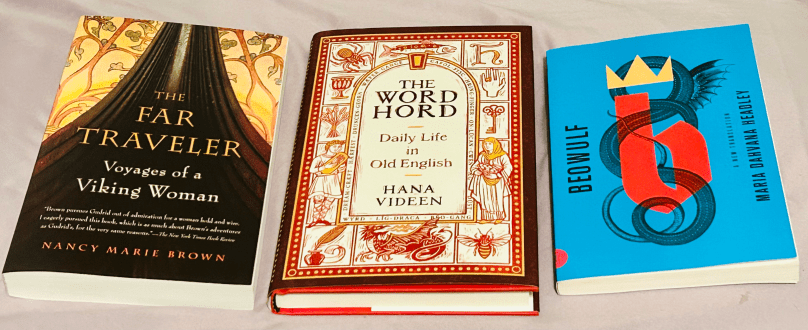
Suggested Reading
This may seem like an Albertsson heavy recommendation list, but he was extra relevant!
 Forþ-weard