Observing Winterfylleþ

It’s already late September, and it feels like this year has just flown by. Those of us in the northern hemisphere are officially in what Americans consider to be “fall” (Personally, I prefer “autumn”). For Anglo-Saxon heathens and Fyrnsideras that means Winterfylleþ (Oct 17th) is nearly upon us.

What is Winterfylleþ?

Hence they called the month in which the winter season began “Winterfilleth”, a name made up from “winter” and “full Moon”, because winter began on the full Moon of that month.
De temporum ratione (The Reckoning of Time), The Venerable Bede

We know from the Venerable Bede that the Old English word translates to “Winter Full Moon” and that moon marks the beginning of Winter1… and that’s pretty much all he has to say on the subject. As usual, Bede gives us just enough information to whet the appetite and make some inferences.

For me, Winterfylleþ is one of my four “big” holy days, along with Geol, Ēostredæg, and Midsumor. For me, it is a time for both thanksgiving and propitiation. I consider it to be the beginning of the Wild Hunt, which will end around Geol. I don’t really have strong textual evidence for this last assertion, but I think it is thematically fitting. Many other cultures and pagan paths consider this time between summer and winter to be liminal, the connection between the world of the living and the dead stronger. For example, pagans with a more Celtic lean are getting ready to celebrate Samhain. Norse heathens may be gearing up for Alfablot. In Mexico, the Day of the Dead is celebrated on November 1st, and of course, we can’t forget about Halloween and All Saints Day. Seems to be a running theme, no?

Because we have little textual evidence for how the Anglo-Saxons might have celebrated this hinge in the year, I look to comparative traditions to inform my praxis. And so, my Winterfylleþ celebration will be three nights with three parts:

  1. Welcoming my honored dead and beloved ancestors into my home.
  2. Saying goodbye to seasonal deities who I will welcome back with summer’s return.
  3. Offering to the gods with prayers for a safe and comfortable winter.

Welcoming the Honored Dead

This can be accomplished in several ways. I like to make an offering and invite my ancestors to linger in my home before preparing a nice dinner. The offering could be anything, really, but I often offer my ancestors coffee because most of my known ancestors enjoyed it during their lifetimes. I may also offer my grandfather’s favorite cigarettes or some pipe tobacco this year.

Once dinner is prepared, I will then set aside a portion of the meal at an extra place setting as an offering. (If more of my living family were pagan, I would invite them to this dinner as well, but alas, they are not). I am incapable of being quiet, so I don’t do the silent supper I often see suggested for Samhain. Instead, I prefer sharing stories of loved ones who have gone on before. Telling stories and toasting the memories of our beloved dead is a very Anglo-Saxon heathen thing to do, in my opinion. 

After dinner, an additional libation offering or dessert offering at the altar may be an excellent choice. For me, this is also a good time to break out my oracle deck and see if my ancestors have anything they’d like to communicate with me. I derive a lot of comfort from these talks.

Saying Goodbye to Seasonal Deities

To me, this is a time to say goodbye to Eorthe for the season as she enters her winter slumber, awaiting Eostre’s return in the spring. This year, I will be placing my representations of them in a special place to “rest” until Hrēþe’s victory over Winter in the new year. This is, of course, largely based on my own UPG and SPG I share with others that suggest Eostre and Eorthe grow quieter in the winter months. 

Prayers for a Safe and Comfortable Winter

In our modern world, the harshness of winter often seems softened by electric lights and gas furnaces. However, it doesn’t take much for those luxuries to disappear, if only temporarily. In my part of the world, we’re sometimes one bad storm with blackouts away from freezing. In my mind, it makes sense to make offerings to the gods in hopes that such storms will pass us by and that death stays away for another season.

As previously mentioned, I consider this to be the beginning of the Wild Hunt. Therefore, it is a good time to ask Woden to steer his Hunt away from my door. Frīg is also a major part of my praxis, so I will be asking for her aid in managing my family’s resources well through the winter months. My offerings will consist of grain, wool, whiskey, and incense. It may seem overboard, but as I said, I consider this one of my “big” celebrations.

The gods that you choose to honor for Winterfylleþ may be completely different. Some Norse heathens choose to honor Freyr (Ing in Fyrnsidu) and the elves for Alfablot at this time. Patricia M. Lafayllve’s A Practical Heathen’s Guide to Asatru2 suggests a Winternights ritual honoring the wights, for example.

Final Thoughts

I view Winterfylleþ as a hinge of the year, a beginning and an end. The practices I am building around this holiday reflect this mindset. As time goes by and I grow in my praxis, these things will likely evolve. It will be interesting to look back at this post next year when I’m preparing for the holiday again.

I’d love to hear from you. Do you celebrate Winterfylleþ? Samhain? Something else? Do you have a favorite tradition associated with this time of year? Let me know in the comments!

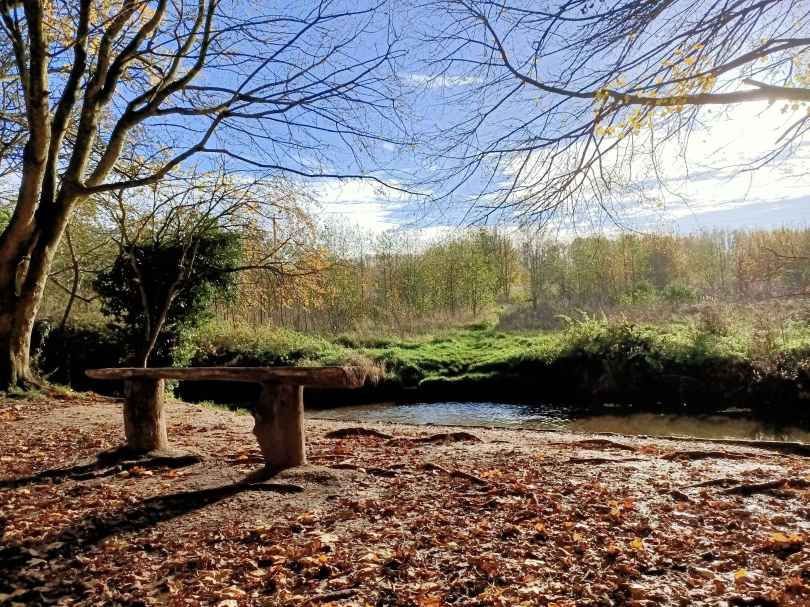
Photo Credit: Gippe

  1. The Anglo-Saxons, much like their Norse cousins, recognized two seasons or halves of the year, Summer and Winter. What we think of today as Autumn/Fall and Spring are split between the two. Bede also mentions this before explaining Winterfylleþ. ↩︎
  2. Chapter 14 https://bookshop.org/p/books/a-practical-heathen-s-guide-to-asatru-patricia-m-lafayllve/8763949?ean=9780738733876 ↩︎

Further Reading

Ancestor Veneration

Winterfylleþ

Heathen Offerings in Modern Context

Disclaimer: While my blog focus is the modern practice of Fyrnsidu and Anglo-Saxon heathenry, this post will be pulling quite a bit from Norse heathen sources and authors because this topic is somewhat universal to the greater modern heathen experience.


If you asked me what I think is the singular, most important concept in all of heathenry, I would be compelled to say that it is thus: reciprocity. And I don’t believe I am alone in that assertion. Many (if not most) contemporary heathen writers spend at least some time on the subject.1 Indeed, it is often discussed in modern pagan circles more broadly. If there is one thing I think a new heathen should have a basic understanding of before entering praxis, it is this fundamental concept.

What is Reciprocity?

Be a friend to your friend, and repay each gift with a gift.

Hávamál 42 – Jackson Crawford’s translation

Diana Paxson sums it up well, I think, in Essential Asatru when she says “Friendship provides a useful model for our relationship with the gods and goddesses and other wights. Like any other relationship, friendship with a god requires mutual respect and attention.”2

Reciprocity, also known as the gifting cycle, is the means by which we build that relationship with our gods. They bless us, and we give them good gifts. Christians do it, too, although I don’t think most of them conceive of it in such terms. They offer their god their time, their money (tithes), their praise, and their faith. In return, they are granted blessings in this life and the hereafter, or so their doctrine goes.

Heathen gifting tends to look a lot more like actual gifts. Some pagans have altars cluttered with votive offerings, while other tend to stick to incense or libations. Praise in the form of poetry or song can also make a worthy gift. Offerings can range from humble to extravagant, and vary by occasion. For example, you might offer a glass of water with your daily devotions. You also might offer an entire bottle of expensive liquor when you get that big promotion you’ve been chasing.

In Fyrnsidu, the exact what you’re gifting is far less important than the fact that you’re actually doing it. Although, I think there is something to be said for selecting a gift for your gods with the same care you would select a gift for a dear friend.

But why, tho?

If you have a good friend,
and really trust him,
and want good to come of your friendship,
you should speak your mind with him,
exchange gifts,
visit him often.

Hávamál 44 – Jackson Crawford’s translation

I want to be really clear that the purpose of the gifting cycle is not bribery.3 When you begin the process of building a relationship with a spirit (be they a god, an ancestor, or a wight) you should not be doing so with the expectation of immediate return on investment. For one thing, they are not obligated to return the favor if there is no interest on their end in having this relationship. That first gift should be because you are interested and want to engage with them, or perhaps thank them for a perceived gift you’ve already received.

Once a relationship is established, then of course the gods become a source of strength, comfort and support in our times of need, much like our human friends. What issues you bring to a deity will depend upon your individual relationship with them. Like different friends sometimes fulfill different roles in our lives, so too may different spirits.

For many of us, these relationships themselves are the entire point of praxis. We want to feel that connection to something beyond ourselves. Whether the emphasis your praxis is on building relationships with gods/goddesses, ancestors, or landwights is a personal decision.

Offerings for Modern Praxis

There has already been a lot of ink spilled on the subject of why blood offerings are no longer appropriate in modern praxis4 (the possible exception being if you are actually a farmer who processes their own livestock as a regular part of your profession) so I am not going to spend a ton of time rehashing that discussion. Just don’t do it, m’kay?

Having said that, burning incense and purchasing items for offering aren’t always practical. Here I’d like to suggest a few alternatives:

  • Use a wax warmer to offer pleasing scents at your altar. This can be a great alternative to burning incense, and can avoid flames entirely if you select an electric option.
  • Spend time doing an activity that brings you closer to your deity. If you are a crafter, this could be time spent making something for your altar. If you worship a hearth goddess, physically cleaning and cleansing your home could be considered a devotional act.
  • If you cook a special meal, set some aside before you eat. This is an especially great option for ancestors if you’re preparing a family recipe.
  • If you are a wordsmith or musically inclined, write a poem or song for your deity’s glorification or amusement.

A Real-Life Example

A statue of Frig using a drop-spindle and surrounded by children sits on a white cloth. Light blue candles flank the statue. A vase of baby's breath is to the left and a wax warmer to the right. An incense bowl filled with sand and ashes sits in front of the statue.

Ignoring the eye-blinding color of my accent wall, this is a small altar to Frīg near my kitchen. I theoretically tend to it on a weekly basis, but let’s face it, I’m not the world’s most consistent Fyrnsidere.

On Frīg’s Day (Fridays), I change the flowers and light the wax warmer. On special occasions, I burn loose incense, but the wax warmer generally works best for me.

Whenever the urge comes over me, I also make libation offerings. Usually for me this looks like making Frīg a cup of tea, and then making myself one, too. My prayer will sound something like this:

Hail Frīg, hearth mother, spinning goddess
[Some thanks or other acknowledgement]
[A petition if I have one]

Sometimes I may talk more about whatever is weighing on my heart while I sip my tea with her. Often times, I sit quietly and listen with my inner self for her responses. On rare occasions I will do divination. None of this is pre-scripted, and there’s very little ritual to it. Since this is a permanent altar in my space, I don’t feel the need for a hallowing every time.

If this reminds you of inviting a friend or a relative over for tea and a deep talk about important things, well, that’s sort of exactly what it is. This is how I build reciprocity with this goddess. From talking with others, sharing tea with Frīg or Frigg (Norse) seems to be a common practice.

My set-up for my ancestor altar is actually quite similar, and includes a different wax warmer. I often offer coffee and break out my oracle deck when talking with my ancestors.

The “Broom Closet”

Not all of us can practice as openly as we would like for numerous reasons, and I think it is important to take a moment to acknowledge that. Some of my suggested alternative offerings are more suitable for people in this situation than others. I think the wax warmer and the devotional acts are probably the safest options, aside from simply leaving out glasses of water, as I’ve seen other pagan creators suggest.

If this is you, just do your best. I strongly believe that the gods will not fault you for earnest gifts, even if they are a bit stealthy and lacking in ceremony.

  1. Alaric Albertsson discusses reciprocity briefly in Chapter 3 of Travels Through Middle Earth: The Path of a Saxon Pagan (revised edition), which discusses the wéofod and giving offerings.
    “Heathens believe that the exchanges of gifts—in the form of offerings—are ways to develop long-term relationships with the gods, ancestors, or landvaettir.” Patricia M. Lafayllve, A Practical Heathen’s Guide to Asatru. This quote is from the beginning of Chapter 13. ↩︎
  2. Diana Paxson discusses how our relationships to our gods are akin to friendships in Chapter 8: Ways of Devotion in her revised edition of Essential Asatru: A Modern Guide to Norse Paganism. ↩︎
  3. There is such a thing as propitiation, but this is different than the gifting cycle and serves a different purpose. Wind in the Worldtree has a post on this subject titled “Propitiation.” ↩︎
  4. Wind in the Worldtree covers this topic well and in-depth in this post, “Blood Sacrifice.” ↩︎

Further Reading