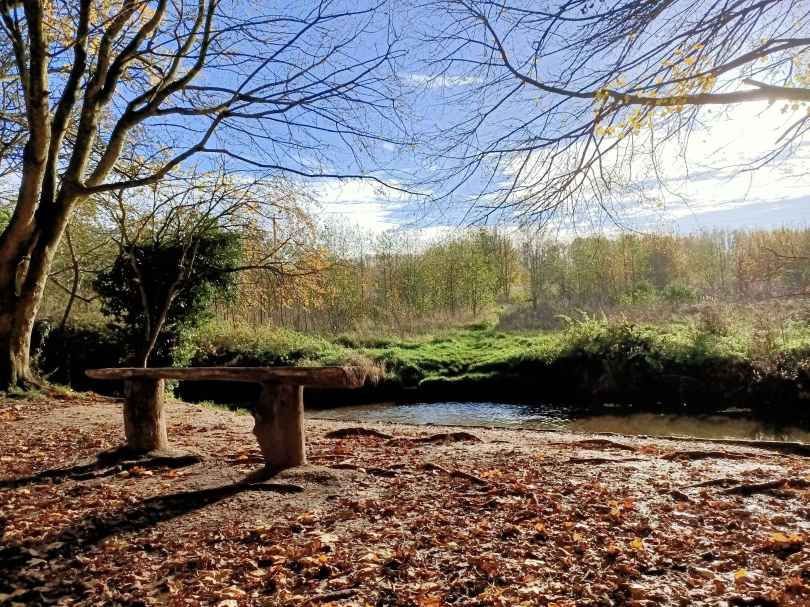
Observing Winterfylleþ

It’s already late September, and it feels like this year has just flown by. Those of us in the northern hemisphere are officially in what Americans consider to be “fall” (Personally, I prefer “autumn”). For Anglo-Saxon heathens and Fyrnsideras that means Winterfylleþ (Oct 17th) is nearly upon us.

What is Winterfylleþ?

Hence they called the month in which the winter season began “Winterfilleth”, a name made up from “winter” and “full Moon”, because winter began on the full Moon of that month.
De temporum ratione (The Reckoning of Time), The Venerable Bede

We know from the Venerable Bede that the Old English word translates to “Winter Full Moon” and that moon marks the beginning of Winter1… and that’s pretty much all he has to say on the subject. As usual, Bede gives us just enough information to whet the appetite and make some inferences.

For me, Winterfylleþ is one of my four “big” holy days, along with Geol, Ēostredæg, and Midsumor. For me, it is a time for both thanksgiving and propitiation. I consider it to be the beginning of the Wild Hunt, which will end around Geol. I don’t really have strong textual evidence for this last assertion, but I think it is thematically fitting. Many other cultures and pagan paths consider this time between summer and winter to be liminal, the connection between the world of the living and the dead stronger. For example, pagans with a more Celtic lean are getting ready to celebrate Samhain. Norse heathens may be gearing up for Alfablot. In Mexico, the Day of the Dead is celebrated on November 1st, and of course, we can’t forget about Halloween and All Saints Day. Seems to be a running theme, no?

Because we have little textual evidence for how the Anglo-Saxons might have celebrated this hinge in the year, I look to comparative traditions to inform my praxis. And so, my Winterfylleþ celebration will be three nights with three parts:

  1. Welcoming my honored dead and beloved ancestors into my home.
  2. Saying goodbye to seasonal deities who I will welcome back with summer’s return.
  3. Offering to the gods with prayers for a safe and comfortable winter.

Welcoming the Honored Dead

This can be accomplished in several ways. I like to make an offering and invite my ancestors to linger in my home before preparing a nice dinner. The offering could be anything, really, but I often offer my ancestors coffee because most of my known ancestors enjoyed it during their lifetimes. I may also offer my grandfather’s favorite cigarettes or some pipe tobacco this year.

Once dinner is prepared, I will then set aside a portion of the meal at an extra place setting as an offering. (If more of my living family were pagan, I would invite them to this dinner as well, but alas, they are not). I am incapable of being quiet, so I don’t do the silent supper I often see suggested for Samhain. Instead, I prefer sharing stories of loved ones who have gone on before. Telling stories and toasting the memories of our beloved dead is a very Anglo-Saxon heathen thing to do, in my opinion. 

After dinner, an additional libation offering or dessert offering at the altar may be an excellent choice. For me, this is also a good time to break out my oracle deck and see if my ancestors have anything they’d like to communicate with me. I derive a lot of comfort from these talks.

Saying Goodbye to Seasonal Deities

To me, this is a time to say goodbye to Eorthe for the season as she enters her winter slumber, awaiting Eostre’s return in the spring. This year, I will be placing my representations of them in a special place to “rest” until Hrēþe’s victory over Winter in the new year. This is, of course, largely based on my own UPG and SPG I share with others that suggest Eostre and Eorthe grow quieter in the winter months. 

Prayers for a Safe and Comfortable Winter

In our modern world, the harshness of winter often seems softened by electric lights and gas furnaces. However, it doesn’t take much for those luxuries to disappear, if only temporarily. In my part of the world, we’re sometimes one bad storm with blackouts away from freezing. In my mind, it makes sense to make offerings to the gods in hopes that such storms will pass us by and that death stays away for another season.

As previously mentioned, I consider this to be the beginning of the Wild Hunt. Therefore, it is a good time to ask Woden to steer his Hunt away from my door. Frīg is also a major part of my praxis, so I will be asking for her aid in managing my family’s resources well through the winter months. My offerings will consist of grain, wool, whiskey, and incense. It may seem overboard, but as I said, I consider this one of my “big” celebrations.

The gods that you choose to honor for Winterfylleþ may be completely different. Some Norse heathens choose to honor Freyr (Ing in Fyrnsidu) and the elves for Alfablot at this time. Patricia M. Lafayllve’s A Practical Heathen’s Guide to Asatru2 suggests a Winternights ritual honoring the wights, for example.

Final Thoughts

I view Winterfylleþ as a hinge of the year, a beginning and an end. The practices I am building around this holiday reflect this mindset. As time goes by and I grow in my praxis, these things will likely evolve. It will be interesting to look back at this post next year when I’m preparing for the holiday again.

I’d love to hear from you. Do you celebrate Winterfylleþ? Samhain? Something else? Do you have a favorite tradition associated with this time of year? Let me know in the comments!

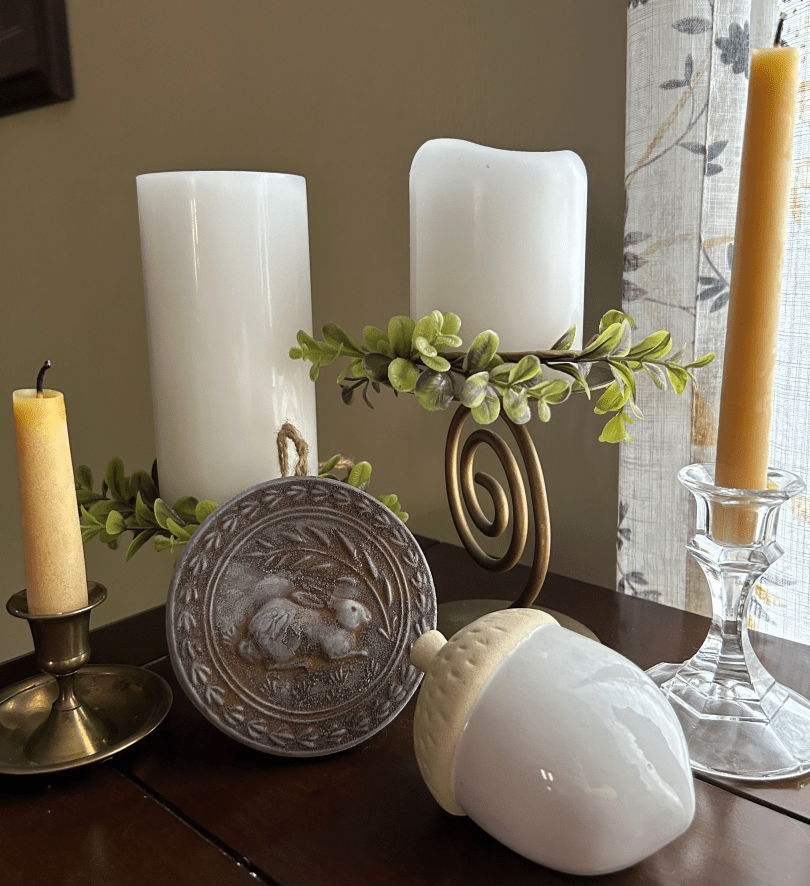
Photo Credit: Gippe

  1. The Anglo-Saxons, much like their Norse cousins, recognized two seasons or halves of the year, Summer and Winter. What we think of today as Autumn/Fall and Spring are split between the two. Bede also mentions this before explaining Winterfylleþ. ↩︎
  2. Chapter 14 https://bookshop.org/p/books/a-practical-heathen-s-guide-to-asatru-patricia-m-lafayllve/8763949?ean=9780738733876 ↩︎

Further Reading

Ancestor Veneration

Winterfylleþ

A Ritual for Beowa

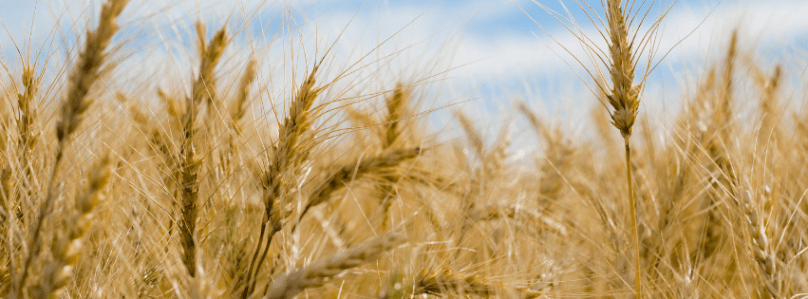
I was very excited to have another opportunity to write a ritual to Beowa this month. It was my pleasure to introduce some of my friends to this beloved Anglo-Saxon god of barley and beer. Our group includes some very talented bards, and we were blessed with a lovely rendition of John Barleycorn to round out our offerings. Here is a link to a popular version of John Barleycorn on YouTube, in case you’ve never heard the song.

As always, this ritual format assumes you have your own preferences for ritual purification.


For this ritual, you will need:

  • Some sort of flat space for an altar. A table, a big flat rock, a window sill. Doesn’t matter.
  • An image of Beowa
  • Libation offerings. Water or juice is absolutely fine, but I suggest barleywine, beer, or malt whiskey.
  • Something to pour the libations into.
  • Incense (optional). I use loose with charcoal or cones, but whatever type you prefer is just dandy.
  • Candles. LED works just as well.

Good Neighbors (optional)

Note: This section is optional and has been put here in case you are performing this ritual outside or in an unfamiliar space (such as a rented park pavilion).

Good Neighbors, Spirits of this Place
We know that this space is yours
But we ask that you let us borrow it for a while
Join us if our purpose is agreeable
Or leave us in peace for a time

Action: Pour libation for the Good Neighbors outside the space where you will be holding ritual.

Statement of Purpose

At Midsumor we reached a fullness as Sunne reached the height of her power. As the full moon comes only fleetingly each month, so too does summer’s peak last but a moment. The waxing year has ended, and the time of waning has began. And so, the harvests reach their peak and must be gathered in.


Now begins the time of reaping all that we have sown. Many of those seeds of intention we planted in the months following Ewemeolc have grown and blossomed, ripened for the harvest, just like the barley on its golden stalks.


And so tonight, we honor Bēowa, the spirit of the barley.

Action: Light the altar candles

Gatekeeper (optional)

Note: I do not usually acknowledge a gatekeeper in my personal praxis, but I know a lot of people do. So, I chose to include this section for those who may be looking for an appropriate gatekeeper-deity in Fyrnsidu. Other options might include Wadda, Frīg, or even Woden, depending on the purpose of the ritual.

Æled, radiant one, offering-bearer
We ask that you give life to this flame
That it may carry our gifts and prayers
Upon its rising smoke
Open the gate!

Action: Light incense or pour libation offering for Æled.

Invocation

Hail to thee, John Barleycorn.
To the one who is sown, grown and reaped.
You provide us with grain for beer and bread
Good food to fill our bellies and make us merry
Through your birth, life and death
You keep us hale all winter through.

Hail Bēowa!
[All: Hail Bēowa]

Action: Pour a libation of barleywine, beer, or malt whiskey for Beowa

We offer you now beer and barely and song,

A return for that which you have given us,
that you may raise you head again in the spring
and give us good gifts again next year.

Action: Pour an additional libation for Beowa. Sing or play John Barleycorn.

Closing

From the gods, to the earth, to us
From us, to the earth, to the gods
A gift has been given, may be it be well received.

Action: Blow out the candles to indicate the closing of the rite. Dispose of offerings appropriately.

Image Credit: Canva

A Ritual for Midsumor

Look at me being timely with posting a ritual this time! The little cadre of midwestern Fyrnsidera that I met up with for Ēosturdæg are meeting again for Midsumor next week. This time we’re having a cookout and giving thanks to Sunne for the life-giving heat and light she provides.

As usual, this post assumes that you or your group have your own preferences for ritual cleanliness.


For this ritual, you will need:

  • Some sort of flat space for an altar. A table, a big flat rock, a window sill. Doesn’t matter.
  • An image of Sunne (optional, esp if outside)
  • Libation offerings. Water or juice is absolutely fine.
  • Something to pour the libations into.
  • Incense (optional). I use loose with charcoal or cones, but whatever type you prefer is just dandy.
  • Candles. LED works just as well.

Good Neighbors (optional)

Note: This section is optional and has been put here in case you are performing this ritual outside or in an unfamiliar space (such as a rented park pavilion).

Good Neighbors, Spirits of this Place
We know that this space is yours
But we ask that you let us borrow it for a while
Join us if our purpose is agreeable
Or leave us in peace for a time

Action: Pour libation for the Good Neighbors outside the space you will be holding ritual.

Statement of Purpose

Today makes the midpoint in the summer season.
It is a hinge upon which the year turns
From new life and growth to harvest and death
The time of warmth and bounty begins to wane
And so we gather to honor Sunne at the height of her power
Before the cycles of nature pull her distant from us once more.

Action: Light the altar candles

Gatekeeper (optional)

Note: I do not usually acknowledge a gatekeeper in my personal praxis, but I know a lot of people do. So, I chose to include this section for those who may be looking for an appropriate gatekeeper-deity in Fyrnsidu. Other options might include Wadda, Frīg, or even Woden, depending on the purpose of the ritual.

Æled, radiant one, offering-bearer
We ask that you give life to this flame
That it may carry our gifts and prayers
Upon its rising smoke
Open the gate!

Action: Light incense or pour libation offering for Æled.

Invocation

Hail Sunne, brilliant Day Rider, and  Ever-glowing goddess
[All Hail Sunne]

Action: Add incense or pour libation for Sunne.

Your brilliance warms Mother Eorthe’s soil,
Calling forth the green growing things that nourish our bodies.
Today, we celebrate the peak of your glory.
We relish and respect the hot rays of your light,
And adore the feel of your warmth upon our skin,
Even as we protect ourselves from your full might


Accept now our offerings, our praise, and our thanks for the beautiful gift of your light. Remember us, even as the wheel turns and autumn begins to encroach upon our bright summer joy.

Action: Add incense or pour additional libation for Sunne. If in a group, allow time after the main offering for individual prayers and offerings. You may also allow time for additional toasts and/or divination.

Closing

From the gods, to the earth, to us
From us, to the earth, to the gods
A gift has been given, may be it be well received.

Action: Blow out the candles to indicate the closing of the rite. Dispose of offerings appropriately.

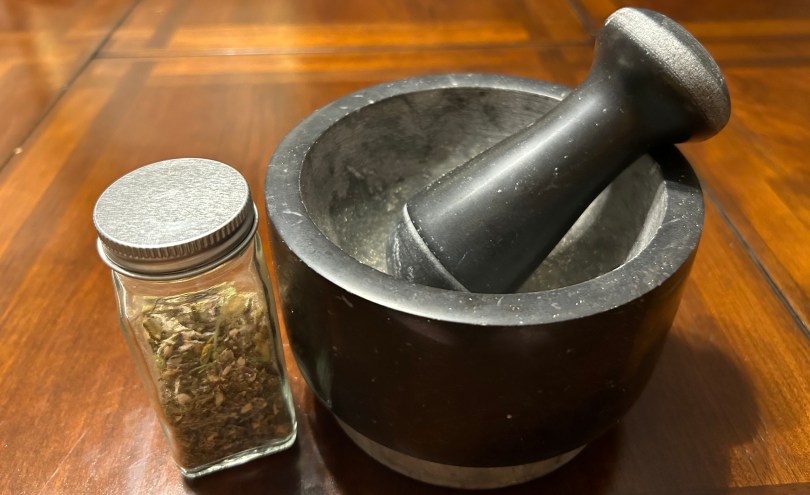
A spice jar of incense and a black stone mortar and pestle.

Nine Herb Charm Incense

Disclaimer: I AM NOT AN EXPERT. Do not touch, consume, burn, or otherwise mess with any plant you are unfamiliar with. Consult an actual herbalist or your doctor. For all the gods’ sakes, please exercise caution and common sense when working with herbs. Always burn incense in a well-ventilated space away from pets.


One of the rather frustrating things about reconstructing Anglo-Saxon paganism is the lack of written sources. What sources we do have were written in the centuries after conversion and tend to provide only tantalizing hints about what might have been. One such piece of writing is the “Nine Herb Charm,” a medical text that describes the use of a combination of, you guessed it, nine plants in a salve along with a lengthy verbal component.1

Were these nine plants the most sacred plants in Anglo-Saxon paganism? We don’t know. Heck, we’re not even 100% sure what some of them actually are. But, the Nine Herb Charm provides all sorts of interesting glimpses into the Anglo-Saxon pagan mind. For example, it mentions “the seven worlds,” informing us just a little about the Anglo-Saxon sense of cosmology.

Since the Nine Herbs are described—at length—to drive out poison and illness, I thought it would make perfect sense to adapt them into an incense recipe for cleansing during formal rituals.

Nine Herb Charm Incense

  • 1 part dried Mugwort
  • 1 part dried Plantain leaves
  • 1 part dried Bittercress
  • 1 part dried Betony
  • 1 part dried Chamomile flowers
  • 1 part dried Stinging Nettle
  • 1 part Applewood shavings
  • 1 part dried Parsley
  • 1 part Fennel seeds

I ordered everything except the parsley and applewood from an herb shop on Etsy. The parsley came from my pantry, and I shaved bits off a piece of the applewood my husband keeps around for his smoker. From there, I measured everything with a teaspoon into my mortar and gave it all a good smash to break up the big bits. This yielded me about half a spice jar of incense.

Guesses & Substitutions

Scholars aren’t entirely sure about the identity of some of the plants. Attorlaðe, for example, is unknown but thought by many to be woody betony.2 I did see someone claim that this plant was black nightshade, which I would not recommend. Cockspur grass is another common interpretation. I chose betony.

The next questionable interpretation is for “lamb’s cress.” Some people take it to mean watercress, while others say hairy bittercress or Cardamine hirsuta.3 I opted to use Cardamine bulbosa, a close relative to hair bittercress that is native to North America.4

My next swap is the applewood shavings. In the charm, they seem to be using a mash made of crabapples. I suppose I could have gotten my hands on some crabapples and dried their skin or something, but I think using a bit of applewood actually makes more sense for incense, especially given that the wood was intended for a smoker anyway.

And finally, there is the parsley. Some scholars believe that fille in the charm refers to chervil or a similar plant.5 Chervil is related to parsley,6 which is much more readily available in my local grocery store. Patti Wiggington uses thyme in her Nine Herb Charm salve.7

Don’t forget a good chant

I also wrote a little galdor to go with it because why not? The original charm had a verbal component, after all.

Nine herbs sacred burn and smoke
Remember all which past you smote
Drive out illness, malice, and pain
Clear this space of the profane.

Conclusion

Is this an exact replica of what was used in Anglo-Saxon times? Definitely not. But do I think it will make the right connections and enhance my praxis? Absolutely.

Let me know in the comments if you have a different Nine Herbs blend that you favor. I’d love to know!

  1. Read a translation here https://www.mimisbrunnr.info/nigon-wyrta-galdor ↩︎
  2. I went with betony, which is listed here: https://heorot.dk/woden-9herbs.html. However, you can find a couple of alternative suggested plants here https://www.herbalhistory.org/home/the-nine-herbs-charm-plants-poisons-and-poetry/ ↩︎
  3. https://www.mimisbrunnr.info/nigon-wyrta-galdor#wyrts ↩︎
  4. https://en.wikipedia.org/wiki/Cardamine_bulbosa ↩︎
  5. https://www.mimisbrunnr.info/nigon-wyrta-galdor#wyrts ↩︎
  6. https://en.wikipedia.org/wiki/Chervil ↩︎
  7. https://www.pattiwigington.com/saturday-spellwork-the-9-herbs-charm/ ↩︎

Sorry if I got a little lazy on the footnotes this time, y’all.

Building an Altar Shelf

I’ve recently had a drive to spruce up my general altar space (this is separate from my area dedicated to Frig). One of the things I really wanted was a shelf to elevate certain items. I looked all over the internet, and nothing felt quite right. So, I decided to do a little DIY. Fortunately, I have a very handy husband who no longer asks questions and just breaks out the measuring tape.

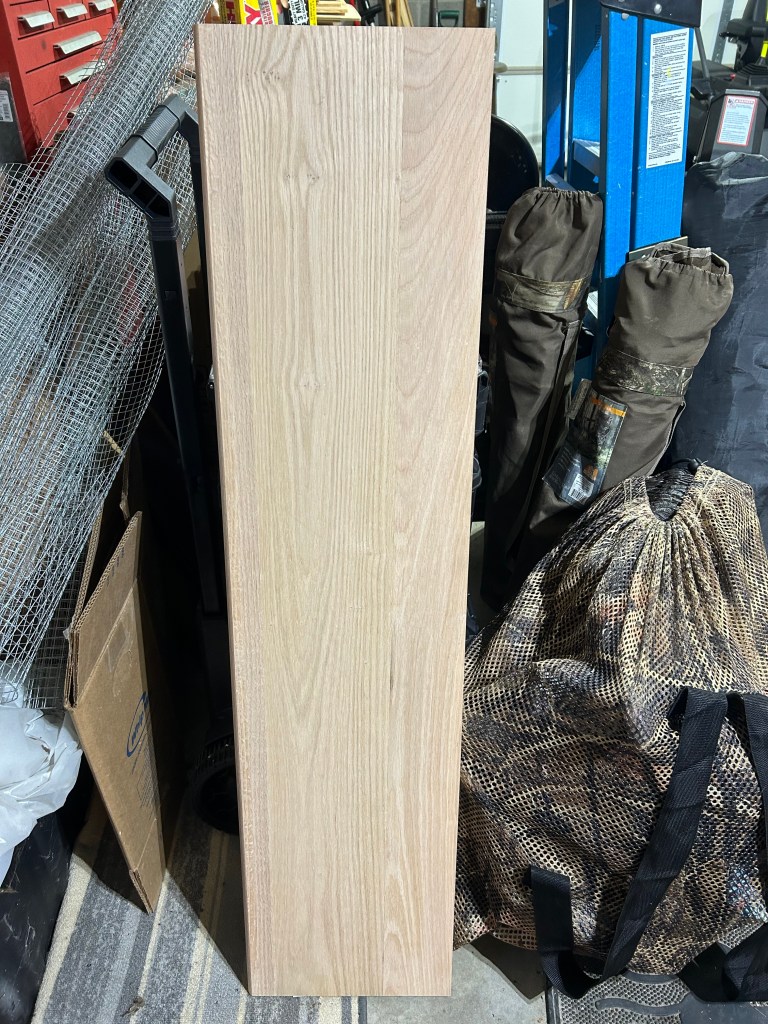
A picture of a 4ft stair tread propped against a toolbox and surrounded by misc stuff, including camping chairs, turkey decoys in a bag, and hardware cloth.

My first order of business was the wood. I did not want to make it out of pine or poplar, though I supposed I could have picked up an appropriately sized board at Home Depot. I was just starting to think I would have to go to a dedicated lumber store when I found this: a red oak stair tread.

Please ignore the camping chairs, bag of turkey decoys, hardware fabric, and other misc items in the picture. The garage really isn’t suited for photo shoots.

Is this the ideal material for building a shelf? Probably not. Was it easily accessible and easy to put in the backseat of my car? Absolutely.

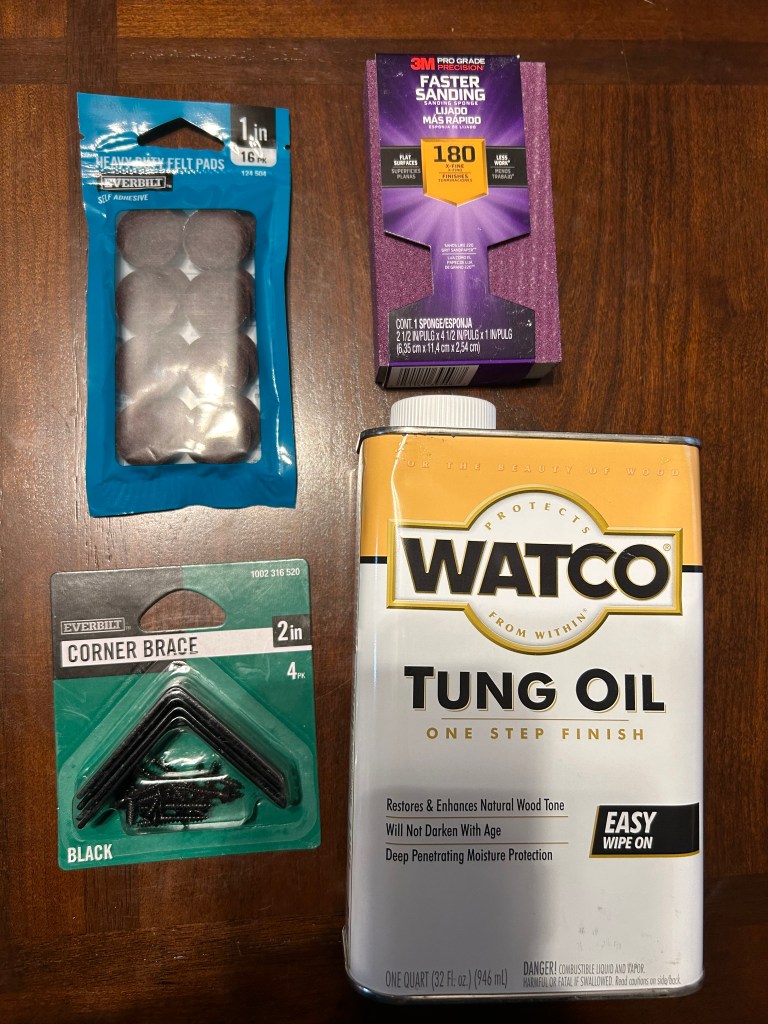
Here’s the full material list:

  • 4′ red oak stair tread
  • 4-pack of 2″ corner braces
  • 1 pack of 1″ felt pads
  • Fine sandpaper or sanding block
  • Tung oil (or whatever finish you prefer)

And the tools we used:

  • Table saw
  • Chop saw
  • Drill
  • Electric sander
A picture of the listed materials.

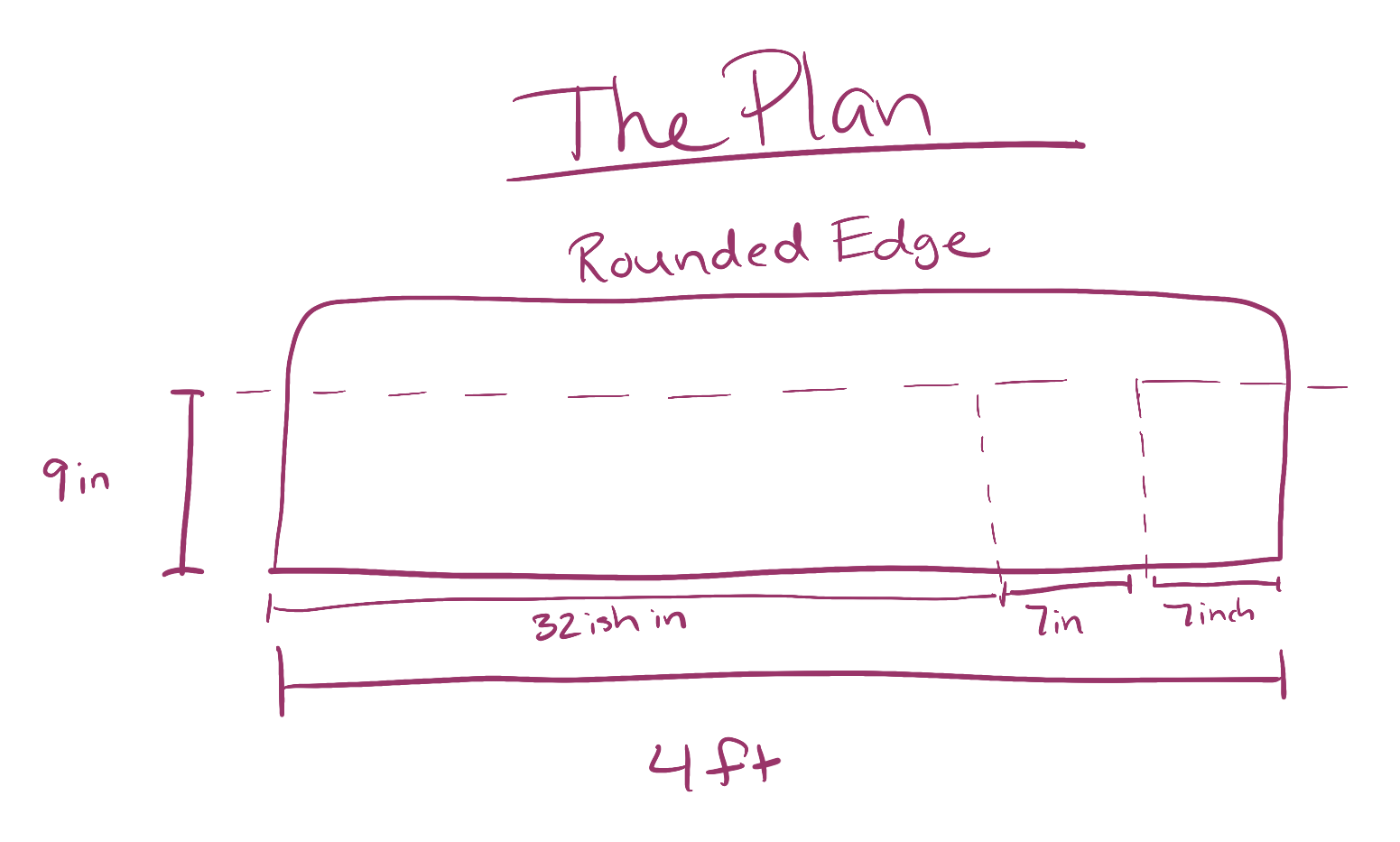
The space I wanted to put this in wasn’t really deep enough to accommodate the whole depth of the stair tread, so the first thing we did was rip it down to 9″ wide with the table saw. If you have the space for it, the rounded edge of the stair tread could actually make a nice front for the shelf. Alas, I do not have the space.

A sketch of how we cut the stair tread.
Here is a rough sketch from my iPad of how we cut the stair tread into the shelf pieces.

After that, my husband cut the legs from the main piece, measured at 7″ each. The remaining 32ish inches became the top piece. While he was doing that, I spot-tested how the tung oil would look on the scrap from step 1.

The chop saw burned the wood a bit, but I was able to get the marks off with the electric sander. I also used this to speed up the process of cleaning up the sharp edges of the cuts before finishing with very fine grit sandpaper.

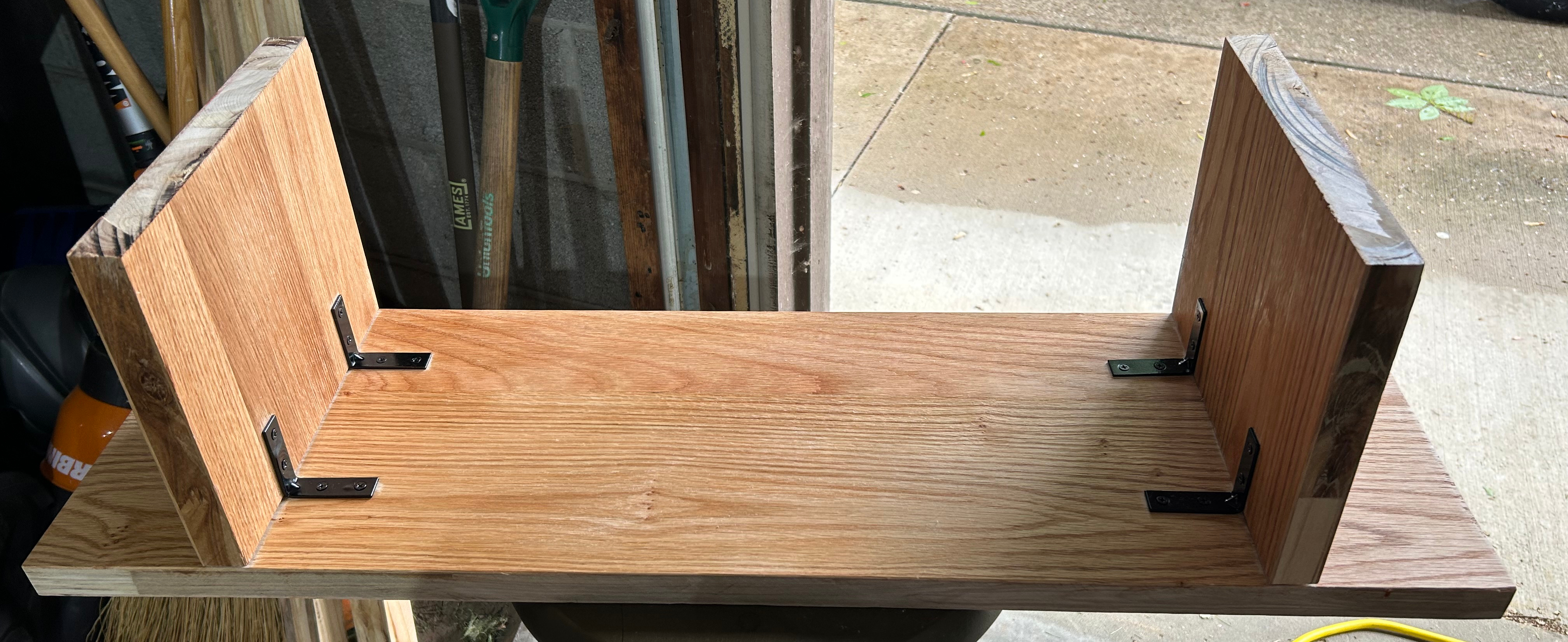
Then, it was time for assembly. I forgot to take pictures, but we measured 4″ in from each end and marked it. We then measured 2″ in along those lines on each side to mark where the braces would go. We placed a leg and a brace and marked the holes. Repeat for each brace.

Drill, baby, drill. Pre-drilling is important, especially since this is a hardwood. Hubby drilled all the holes, and then assembly began.

The shelf flipped upside down to show the corner braces
Here you can see the placement of the braces.

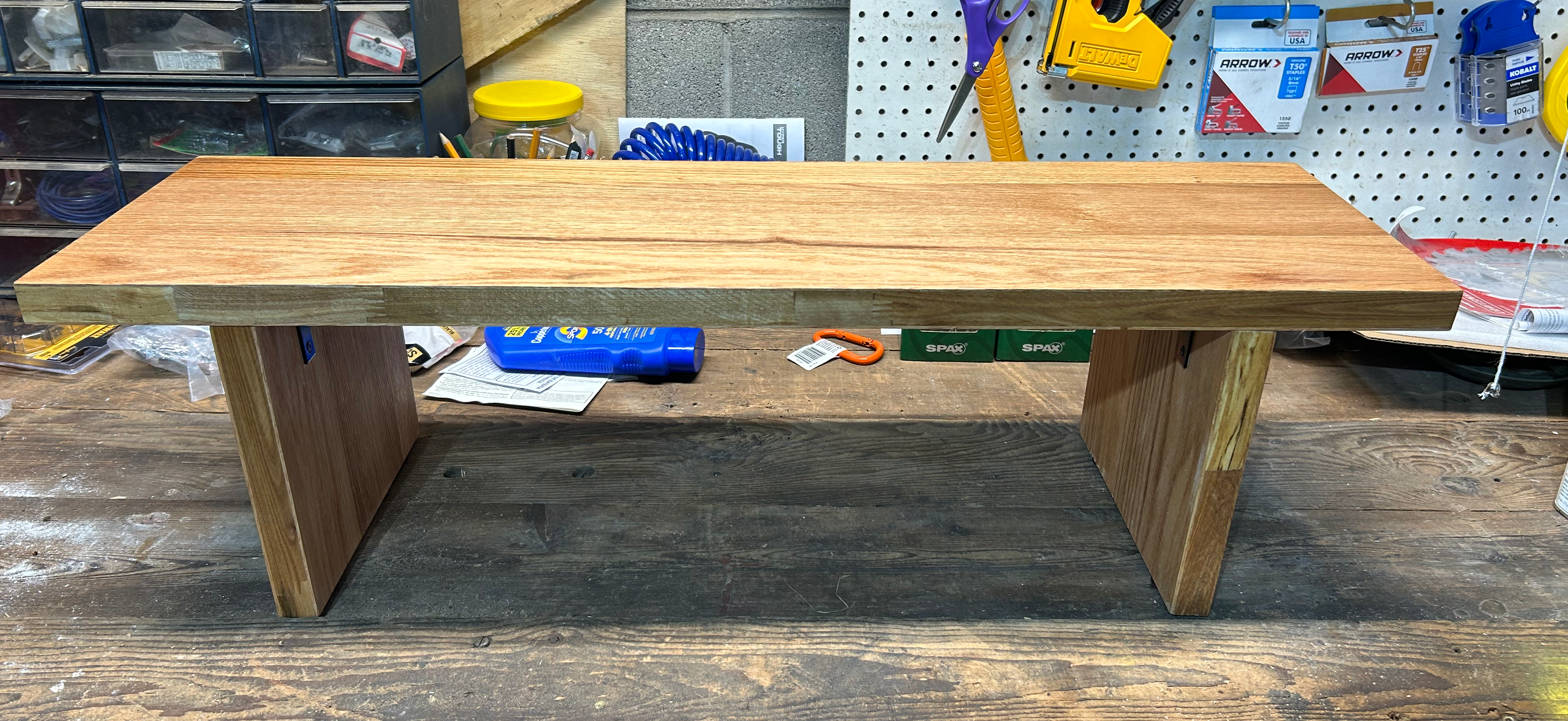
From there it was just a matter of rubbing on the tung oil and leaving it sit for 15 minutes before buffing it out. I let it cure for a day and then repeated the process and cured it one m ore day before adding the felt pads. And voila! A finished shelf for my altar space.

Finished shelf sitting on a work bench.
The finished shelf sits on the garage workbench

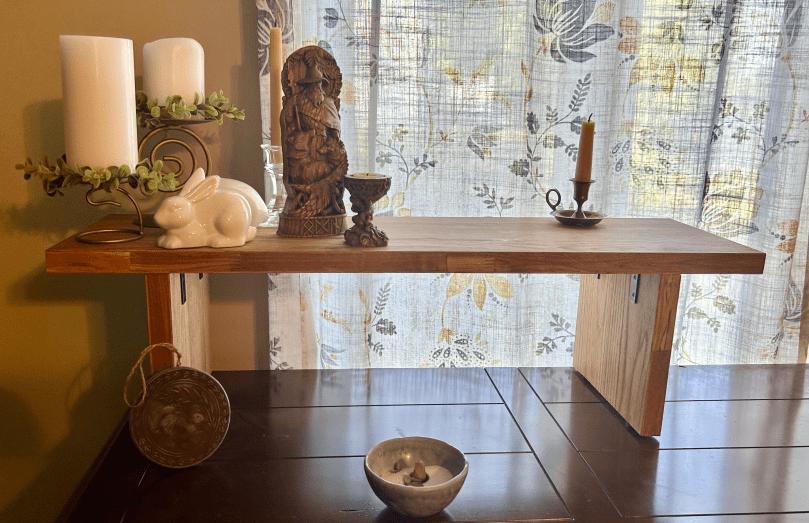
This was a really fun and gratifying project. The finished product is hardly perfect, but it was made with love and perfect for my needs. I’m looking forward to having this shelf in my sacred space for many years to come.

A Ritual to Eostre

The spring has just been flying by and I have not been on top of the blog! It seems I blinked and it was Ēosturdæg. The big post I’ve been working on will be delayed, I’m afraid. But, never fear, I do have more content coming. For now, I have a somewhat belated ritual to share with you. I composed following group ritual for a meet-up with other Fyrsideras this weekend. I’m posting it a bit late but there’s no rule that says we can’t hail Ēostre any time besides Ēosturdæg! It’s a little short and sweet but I hope y’all find it helpful.

A few important notes: I am assuming that the individual or group performing the ritual has their own preferences for ritual cleansing, and so jump straight into the hallowing. And while I do not personally include a gatekeeper in my personal praxis, I have included a section for those who do; feel free to skip it. As always, my hallowing and closing are borrowed from my friend Wind in the Worldtree. See my Geol ritual for more ritual notes.


For this ritual you will need:

  • Some sort of flat space for an altar. A table, big flat rock, a window sill. Doesn’t matter.
  • An images of Ēostre (optional)
  • Libation offerings. Water or juice is absolutely fine.
  • Birdseed or similar
  • Something to pour the libations into.
  • Incense (optional). I use loose with charcoal, but whatever type you prefer is just dandy.
  • Candles. LED work just as well.

Hallowing

May the gods guide us,
May our oaths keep us,
May our deeds free us,
May our ancestors aid us always.
May the gods banish from this place ill and wrong,
Hallow this space, shield us from all baneful wights,
Let the gods’ blessing be over our heads!

Action: Walk around the space with a flame such as a candle or lamp as the words are spoken. Light the altar candles.

Statement of Purpose

We have come together today to celebrate the coming of spring, the beginning of a season of warmth and growth. Hrēðe has defeated Old Man Winter, and now Ēostre dances across the land, coaxing all that is green and good from Eorthe’s rich soil.

Gatekeeper

Æled, radiant one, offering-bearer
We ask that you give life to this flame
That it may carry our gifts and prayers
Upon its rising smoke
Open the gate!

Action: Pour a libation or light incense for Æled

Invocation

Hail Ēostre, Bringer of Summer and Bearer of Blossoms

[All: Hail Ēostre]


You bring us to wakefulness with the dawn
As you rouse the Earth from her Winter slumber.
You know the timing of flowers and the dances of bees.

We come before you to celebrate your day,
Grateful for the waking world around us,
For he dandelions that grow plentiful around our feet,
The singing of birds and the buzzing of bees.
And the sweet scent of spring rain before the summer blooms.
We thank you for these signs of the turning season
And the warmer temperatures that bring them.

They are such beautiful gifts that you give us.

A gift calls for a gift, and so now we bring you our humble offerings.

Action: Pour libations and/or scatter birdseed (if outdoors). If in a group, allow time after the main offering for individual prayers and offerings. You may also allow time for additional toasts.

Closing

From the gods, to the earth, to us
From us, to the earth, to the gods
A gift has been given, may it be well received

Action: Blow out candles to signify the end of the ritual and dispose of the offerings appropriately.

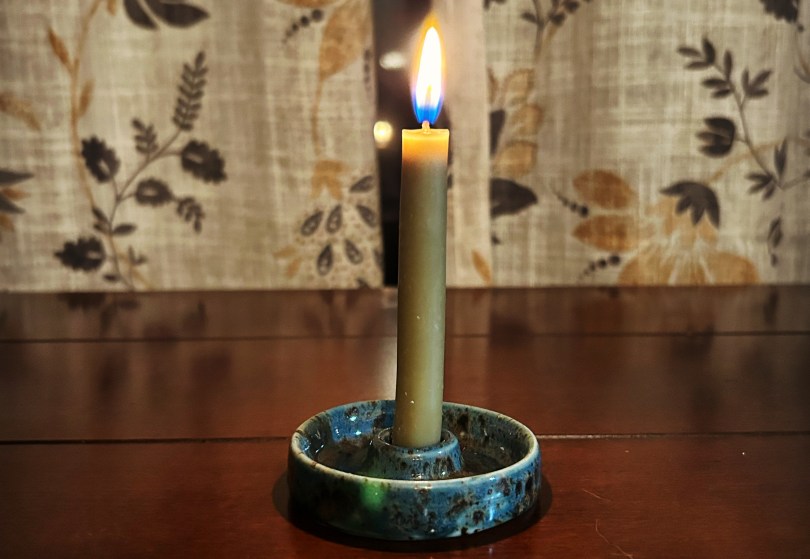
A bayberry candle burning in a ceramic holder

Should Fyrnsideras Celebrate Ewemeolc?

The obvious answer to the title question is that Fyrnsideras can celebrate whatever holy days they want. I’m not your boss. Still, I’d like lay out as best I can the historical basis for an early February festival and why we should—or maybe shouldn’t—call it Ewemeolc.

What is Ewemeolc?

According to most sources, Ewemeolc is a celebration of the lambing seasons and the return of lactation among the animals that Anglo-Saxons and their neighbors relied on. It is the very first celebration of the coming season of abundance after a season of deprivation. To quote Alaric Albertsson, “This is what we celebrate each year at Ewemeolc—renewal and sustenance.”1

Many readers may be completely unfamiliar with this term, or think it sounds suspiciously similar to the name of another pagan holiday, and I can’t really blame them. Researching for this post was, in a word, frustrating. The word “Ewemeolc” does not appear to be widely attested, or even really discussed as far as I can tell. The Venerable Bede, our main source for Anglo-Saxon calendar information, certainly doesn’t mention it at all. Alaric Albertsson lists it as a holy tide in Travels Through Middle Earth quoted above, and every other reference I’ve found so far usually turns out to be citing him. Really, the name is nothing more than a semi-plausible Old English moniker for Imbolc, a celebration of Celtic origin.

Imbolc itself is also somewhat contested, with several theories as to the origin of its name. The most commonly accepted of these today is the idea that Imbolc or Imbolg means “in the belly” and refers to the pregnancy of sheep. Meanwhile, the construction of “Ewemeolc” is based on is a linguistic theory that it meant “Ewe’s milk” from the 10th century that has been discredited.2

With this information we can see that calling the holiday by the name Ewemeolc is a somewhat dubious proposition. It can be argued that there is no need to construct an old sounding name for a reconstruction of a festival that may—or may not—have existed. On the other hand, I have yet to hear anyone suggested a better name for Fyrnsideras to use. But even if we dispatch with the term Ewemeolc, there is no need to throw out the baby with the bathwater; we can still have our early spring festival.

Why Celebrate It?

So, if Ewemeolc isn’t an explicitly attested celebration, why should we consider including it in our sacred calendars?

  1. We do know that the Anglo-Saxons were doing something at that time of year since Bede specifically mentions they offered cakes during Solmōnaþ (roughly February in our calendar).3
  2. Imbolc for all we can debate its etymology is well established as a holiday among modern pagans. A tradition doesn’t have to be old to be valid.

Many Fyrnsideras live in families and communities of mixed traditions. For some of us, a group like the ADF4 provide the only in-person fellowship we can participate in regularly. Finding common ground in our holidays is often a necessity.

Constructing a Fyrnsidish Early Spring Festival

If we want to start with the evidence, we must begin with Bede and his cakes. The hearth cakes of the Anglo-Saxons were more akin to flatbread than what modern readers probably think of when they see “cake.”5 An appropriate modern substitute would probably be some form of oatcake or bannock. (I don’t think the gods would object if you wanted to make a modern cake with tasty buttercream frosting though.)

While digging in to modern Imbolc and Candlemas traditions, another possible modern alternative also caught my eye: pancakes. Personally, I kind of adore the idea of waking up on a chilly February morning and diving into a stack of thick, fluffy buttermilk pancakes. This is also the time of year when trees are tapped for syrup, so it seems very on trend for the season.

Bede tells us nothing about why the cakes were offered, of course. Nor does he give us any indication how those cakes may have differed from the everyday hearth cakes. My personal theory is that they were giving back part of their remaining winter stores to the Earth or some other agricultural deity to ensure the return of spring and the growing season. There was real sacrifice in giving up any part of your food supply this late in the winter.

And so, to go any further in our reconstruction we must look to other celebrations that take place in the early, early spring. Here we can find a few interesting threads to pull: fertility, cleansing, weather prediction, and the increasing light.

Fertility

The source of the sustenance and renewal that Albertsson eloquently discusses in Travels Through Middle Earth is specifically the milk brought about by the lambing seasons, a results of the ewes’ pregnancy. Likewise, this same theme is found in the Imbolc celebrations. It should be noted here that one of the products of this milk—fresh, salty soft cheese—was commonly eaten with hearth cakes. Hmm, did we just solve the mystery of Bede’s cakes?

Many Fyrnsideras do syncretize with Religio Romana, so we can also look to Lupercalia, the Roman festival in mid-February for evidence of a fertility theme. Although, I don’t in any way recommend recreating the Roman method of ensuring human fertility. Getting smacked on the hand with a thong of goat’s hide after it was sacrificed holds zero appeal for me.6

Plutarch also mentions that Lupercalia was said to have been celebrated by shepherds in ancient times (from his perspective). I don’t think this has any bearing on Imbolc celebrations, but I do think it’s a fun coincidence.

Cleansing

Another thread we find in common among other early spring festivals is a focus on purification or cleansing. Spring cleaning continues to be a traditional activity for this time of year into the modern day.

Candlemas, which is a Christian holiday, focuses on the purification of Mary following Jesus’s birth. It’s possible that could have also melded with other local traditions in areas where Candlemas is still celebrated to this day.

Looking back to the Romans again, we also find the February and Lupercalia have cleansing associations.

Weather Prediction

I’ve been calling this an early spring festival, but you could by all rights also say this is a late winter festival. In some places I believe it’s even referred to as midwinter.7 So, spring isn’t really quite here yet with the coming of the lambs. Figuring out just how much longer the winter weather is going to last was therefore top of mind for our agriculturally focused forbearers.

The methods of doing this weather divination vary across the world, and within our geographic areas of concern for our reconstruction purposes. Many involve hibernating animals, while others simply say that foul weather on Imbloc bodes well for an early spring8.

One practice did make its way across the pond to the United States, however. German settlers in Pennsylvania particularly brought with them a custom of looking to a hedgehog or a badger to see what the future weather might hold. Well, their new home didn’t quite have those same animals, and so the tradition of Groundhog’s Day on February 2nd was born.

Goddesses to Honor for Ewemeolc

Pagans of more Celtic leanings often venerate Brigid or St. Brigid during Imbolc. If you are a Fyrnsidere who has some syncretism with Celtic polytheism and venerates Brigid, this may be your go-to. I’m not, so I won’t really go into further detail on that here.

The Earth Mother

I think Mother Earth gives Woden a run for his money when it comes to who has the most names. In Fyrnsidu she is known as Eorthe or Folde. Nerthus and Hludana are names for her from other Germanic traditions. And of course, the Norse call her Jorð. You can find her in Greek traditions as Gaia, and to the Romans she was Terra. Modern druids in the ADF include an invocation to the Earth Mother in every single one of their public rituals.

I think it might be fair to say that Mother Earth or the personification of the Earth is the most widely worshiped entity in modern paganism. In my personal opinion, you could make a case for her being one of the most important deities, because it is through her that we receive many of the gods’ gifts, such as the nourishment for our bodies, the clothes that protect us, and the materials to build our shelters.

At this time of the year in the northern hemisphere, Eorthe is just waking up from her long sleep. Unseen beneath the snow and mud seeds are starting their slow progress towards germination. You could say they are safe in Eorthe’s belly, waiting to be born. Much like the lambs in the bellies of the ewes, no?

Frīg

This is probably a less obvious choice. However, if you venerate Frīg and want to lean into the spring cleaning and human fertility aspects of the season, inviting her to your celebrations just makes sense.

There are several ways to understand Frīg. Personally, I lean more into some of the associations from Norse mythology. I see her as concerned with maintaining order in the home, textile crafts, motherhood, child-bearing, and magic. She is a seer, a weaver of Wyrd and friþ. Beofeld from Wind in the Worldtree has laid out a reconstruction of Anglo-Saxon Frīg that leans more into the Roman interpretatio germanica of her as a Venus figure.9 Beauty, sex, and even war. I don’t actually think this conflicts with my view of her at all, since I see her and the Norse Freyja as the same figure (you can disagree with me, that’s okay).

Suggestions for Celebration

  • Have a paganized Æcerbot10 (if you garden).
  • Have a ritual to bless your gardening tools (if you garden).
  • Have a fertility ritual for your local farmers’ market vendors’ gardens.
  • Have a fertility ritual for yourself and your partner, if that’s something you’re interested in.
  • Consider adding a representation of Eorthe to your altar space if you don’t already have one.
  • Eat and offer goat cheese.
  • Bake little offering cakes or rolls.
  • Have pancakes.
  • Do some weather divination, groundhog or badger optional.
  • Do some spring cleaning
  • Take a ritual bath or an ice bath
  1. Alaric Albertsson, Travels Through Middle Earth, Chapter 10 Holy Tides. ↩︎
  2. The reconstruction is on an older theory of the origin of the word Imbolc, which appears in Cormac’s Glossary. Special thanks to Rob Holman of Ingwine.org for pointing me to this.
    

I did not have time personally track down copies of the correct sources for discrediting it, but the Wikipedia article for Imbolc is extremely well footnoted for those who would like to pursue this further. ↩︎
  3. The Venerable Bede, The Reckoning of Time ↩︎
  4. Ár nDraíocht Féin: A Druid Fellowship ↩︎
  5. The Early English Bread Project explains what Anglo-Saxon bread or hearth cakes were like and how to make your own. ↩︎
  6. Plutarch describes the Lupercalia festivities observed by Ceaser in Life of Ceaser. ↩︎
  7. Bex from The witches’ cookery definitely refers to it as midwinter in her Imbolc videos, which you should definitely check out for some fun, witchy food and craft ideas. ↩︎
  8. Here again the Wikipedia article for Imbolc is well footnoted for this subject. I am not any kind of expert on Imbolc and will not pretend to be. ↩︎
  9. Frīg reconstruction from Wind in the Worldtree. ↩︎
  10. The Æcerbot is an Old English charm from after the Christianization of the Anglo-Saxons that seems to have some pagan undertones. It’s a popular choice for adapting to more pagan language. Here are some examples from Wind in the Worldtree and Silver Well Hearth. ↩︎

Further Reading

Eorthe

Frīg

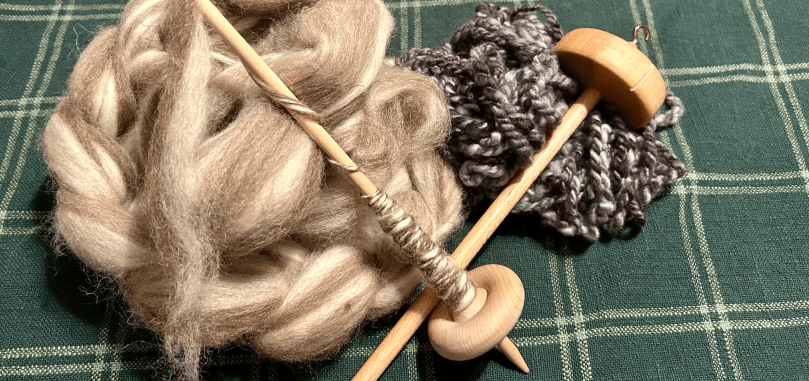
A top-whorl drop spindle and a bottom-whorl drop spindle crossed and resting against brown and cream wool roving and blue-gray hand-spun yarn.

Who Was Going to Tell Me About Distaff Day?

My first post for Forþ-weard was about about tailoring your personal sacred calendar to your own praxis. Well, I have a new example for you happening in my own praxis in real time.

I recently—as in, during the last 48 hours—learned of the concept of Distaff Day (this is the part where you can all point and laugh at the silly American). Anyway, as someone whose praxis is largely dominated by Frīg, I am enamoured of this concept. Now, as far as I’m aware, this holiday is wholly Christian in origin1, being the day following the feast of the Epiphany, but it’s also been taken up secularly by people in fiber arts communities (which is how I came to learn of it)2.

In continuing on with that first post about fleshing out your own holiday calendar, I’m thinking I want to find some ways to incorporate Distaff Day into my rotation. Here are the traditions I’m considering starting for myself:

  • I didn’t spin at all during Geol this year more out of coincidence than conscious choice, but I’m thinking having an intentional fiber arts hiatus from Mother’s Night through Distaff Day in the future. There’s precedence for this practice, too.3
  • Scheduling a vacation day from work if January 7th happens to fall during the week and I have the time available.
  • Designating Distaff Day as when I will begin my first project of the new year.
  • Making an offering of my first spun yarn of the new year to ask Frīg’s blessing on my new endeavors.
  • Joining a local yarn spinning event, class or workshop that day if one is available.
  • Treating myself to a new distaff or spindle if needed4

These may seem like small things, but recently I’ve decided that I want to get more serious about devotional craft work—and just generally becoming better at spinning. I love the idea of formalizing and ritualizing the beginning of my crafting year just a little bit to help me in these goals.

So, who wants to join me in celebrating a heathen-ified version of Distaff Day? Let me know if you have any other ideas on how we could celebrate!

  1. If I’m wrong about this, please feel free to point me to some sources in the comments. I’d love to see them! ↩︎
  2. Specifically, I saw this video on YouTube by JillianEve. ↩︎
  3. Jacob Grimm states in Teutonic Mythology V.1 that “In the North too, from Yule-day to New-year’s day, neither wheel nor windlass must go round.” ↩︎
  4. I don’t actually own a distaff of any kind at the moment, and it’s something of a hinderance to my progress with my drop spindles. ↩︎