I was very excited to have another opportunity to write a ritual to Beowa this month. It was my pleasure to introduce some of my friends to this beloved Anglo-Saxon god of barley and beer. Our group includes some very talented bards, and we were blessed with a lovely rendition of John Barleycorn to round out our offerings. Here is a link to a popular version of John Barleycorn on YouTube, in case you’ve never heard the song.
As always, this ritual format assumes you have your own preferences for ritual purification.
For this ritual, you will need:
Some sort of flat space for an altar. A table, a big flat rock, a window sill. Doesn’t matter.
An image of Beowa
Libation offerings. Water or juice is absolutely fine, but I suggest barleywine, beer, or malt whiskey.
Something to pour the libations into.
Incense (optional). I use loose with charcoal or cones, but whatever type you prefer is just dandy.
Candles. LED works just as well.
Good Neighbors (optional)
Note: This section is optional and has been put here in case you are performing this ritual outside or in an unfamiliar space (such as a rented park pavilion).
Good Neighbors, Spirits of this Place We know that this space is yours But we ask that you let us borrow it for a while Join us if our purpose is agreeable Or leave us in peace for a time
Action: Pour libation for the Good Neighbors outside the space where you will be holding ritual.
Statement of Purpose
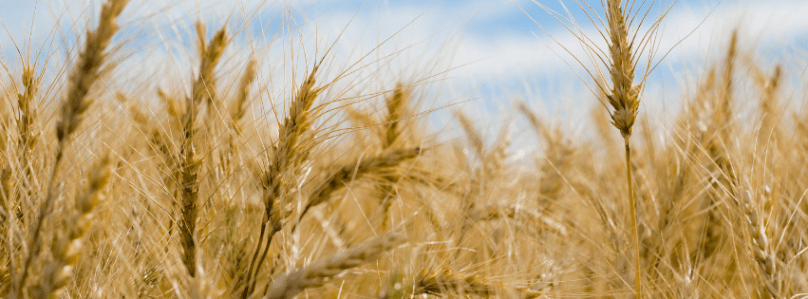
At Midsumor we reached a fullness as Sunne reached the height of her power. As the full moon comes only fleetingly each month, so too does summer’s peak last but a moment. The waxing year has ended, and the time of waning has began. And so, the harvests reach their peak and must be gathered in.
Now begins the time of reaping all that we have sown. Many of those seeds of intention we planted in the months following Ewemeolc have grown and blossomed, ripened for the harvest, just like the barley on its golden stalks.
And so tonight, we honor Bēowa, the spirit of the barley.
Action: Light the altar candles
Gatekeeper (optional)
Note: I do not usually acknowledge a gatekeeper in my personal praxis, but I know a lot of people do. So, I chose to include this section for those who may be looking for an appropriate gatekeeper-deity in Fyrnsidu. Other options might include Wadda, Frīg, or even Woden,depending on the purpose of the ritual.
Æled, radiant one, offering-bearer We ask that you give life to this flame That it may carry our gifts and prayers Upon its rising smoke Open the gate!
Action: Light incense or pour libation offering for Æled.
Invocation
Hail to thee, John Barleycorn. To the one who is sown, grown and reaped. You provide us with grain for beer and bread Good food to fill our bellies and make us merry Through your birth, life and death You keep us hale all winter through. Hail Bēowa! [All: Hail Bēowa]
Action: Pour a libation of barleywine, beer, or malt whiskey for Beowa
We offer you now beer and barely and song, A return for that which you have given us, that you may raise you head again in the spring and give us good gifts again next year.
Action: Pour an additional libation for Beowa. Sing or play John Barleycorn.
Closing
From the gods, to the earth, to us From us, to the earth, to the gods A gift has been given, may be it be well received.
Action: Blow out the candles to indicate the closing of the rite. Dispose of offerings appropriately.
Look at me being timely with posting a ritual this time! The little cadre of midwestern Fyrnsidera that I met up with for Ēosturdæg are meeting again for Midsumor next week. This time we’re having a cookout and giving thanks to Sunne for the life-giving heat and light she provides.
As usual, this post assumes that you or your group have your own preferences for ritual cleanliness.
For this ritual, you will need:
Some sort of flat space for an altar. A table, a big flat rock, a window sill. Doesn’t matter.
An image of Sunne (optional, esp if outside)
Libation offerings. Water or juice is absolutely fine.
Something to pour the libations into.
Incense (optional). I use loose with charcoal or cones, but whatever type you prefer is just dandy.
Candles. LED works just as well.
Good Neighbors (optional)
Note: This section is optional and has been put here in case you are performing this ritual outside or in an unfamiliar space (such as a rented park pavilion).
Good Neighbors, Spirits of this Place We know that this space is yours But we ask that you let us borrow it for a while Join us if our purpose is agreeable Or leave us in peace for a time
Action: Pour libation for the Good Neighbors outside the space you will be holding ritual.
Statement of Purpose
Today makes the midpoint in the summer season. It is a hinge upon which the year turns From new life and growth to harvest and death The time of warmth and bounty begins to wane And so we gather to honor Sunne at the height of her power Before the cycles of nature pull her distant from us once more.
Action: Light the altar candles
Gatekeeper (optional)
Note: I do not usually acknowledge a gatekeeper in my personal praxis, but I know a lot of people do. So, I chose to include this section for those who may be looking for an appropriate gatekeeper-deity in Fyrnsidu. Other options might include Wadda, Frīg, or even Woden,depending on the purpose of the ritual.
Æled, radiant one, offering-bearer We ask that you give life to this flame That it may carry our gifts and prayers Upon its rising smoke Open the gate!
Action: Light incense or pour libation offering for Æled.
Invocation
Hail Sunne, brilliant Day Rider, and Ever-glowing goddess [All Hail Sunne]
Action: Add incense or pour libation for Sunne.
Your brilliance warms Mother Eorthe’s soil, Calling forth the green growing things that nourish our bodies. Today, we celebrate the peak of your glory. We relish and respect the hot rays of your light, And adore the feel of your warmth upon our skin, Even as we protect ourselves from your full might
Accept now our offerings, our praise, and our thanks for the beautiful gift of your light. Remember us, even as the wheel turns and autumn begins to encroach upon our bright summer joy.
Action: Add incense or pour additional libation for Sunne.If in a group, allow time after the main offering for individual prayers and offerings. You may also allow time for additional toasts and/or divination.
Closing
From the gods, to the earth, to us From us, to the earth, to the gods A gift has been given, may be it be well received.
Action: Blow out the candles to indicate the closing of the rite. Dispose of offerings appropriately.
Disclaimer: While my blog focus is the modern practice of Fyrnsidu and Anglo-Saxon heathenry, this post will be pulling quite a bit from Norse heathen sources and authors because this topic is somewhat universal to the greater modern heathen experience.
If you asked me what I think is the singular, most important concept in all of heathenry, I would be compelled to say that it is thus: reciprocity. And I don’t believe I am alone in that assertion. Many (if not most) contemporary heathen writers spend at least some time on the subject.1 Indeed, it is often discussed in modern pagan circles more broadly. If there is one thing I think a new heathen should have a basic understanding of before entering praxis, it is this fundamental concept.
What is Reciprocity?
Be a friend to your friend, and repay each gift with a gift.
Hávamál 42 – Jackson Crawford’s translation
Diana Paxson sums it up well, I think, in Essential Asatru when she says “Friendship provides a useful model for our relationship with the gods and goddesses and other wights. Like any other relationship, friendship with a god requires mutual respect and attention.”2
Reciprocity, also known as the gifting cycle, is the means by which we build that relationship with our gods. They bless us, and we give them good gifts. Christians do it, too, although I don’t think most of them conceive of it in such terms. They offer their god their time, their money (tithes), their praise, and their faith. In return, they are granted blessings in this life and the hereafter, or so their doctrine goes.
Heathen gifting tends to look a lot more like actual gifts. Some pagans have altars cluttered with votive offerings, while other tend to stick to incense or libations. Praise in the form of poetry or song can also make a worthy gift. Offerings can range from humble to extravagant, and vary by occasion. For example, you might offer a glass of water with your daily devotions. You also might offer an entire bottle of expensive liquor when you get that big promotion you’ve been chasing.
In Fyrnsidu, the exact what you’re gifting is far less important than the fact that you’re actually doing it. Although, I think there is something to be said for selecting a gift for your gods with the same care you would select a gift for a dear friend.
But why, tho?
If you have a good friend, and really trust him, and want good to come of your friendship, you should speak your mind with him, exchange gifts, visit him often.
Hávamál 44 – Jackson Crawford’s translation
I want to be really clear that the purpose of the gifting cycle is not bribery.3 When you begin the process of building a relationship with a spirit (be they a god, an ancestor, or a wight) you should not be doing so with the expectation of immediate return on investment. For one thing, they are not obligated to return the favor if there is no interest on their end in having this relationship. That first gift should be because you are interested and want to engage with them, or perhaps thank them for a perceived gift you’ve already received.
Once a relationship is established, then of course the gods become a source of strength, comfort and support in our times of need, much like our human friends. What issues you bring to a deity will depend upon your individual relationship with them. Like different friends sometimes fulfill different roles in our lives, so too may different spirits.
For many of us, these relationships themselves are the entire point of praxis. We want to feel that connection to something beyond ourselves. Whether the emphasis your praxis is on building relationships with gods/goddesses, ancestors, or landwights is a personal decision.
Offerings for Modern Praxis
There has already been a lot of ink spilled on the subject of why blood offerings are no longer appropriate in modern praxis4 (the possible exception being if you are actually a farmer who processes their own livestock as a regular part of your profession) so I am not going to spend a ton of time rehashing that discussion. Just don’t do it, m’kay?
Having said that, burning incense and purchasing items for offering aren’t always practical. Here I’d like to suggest a few alternatives:
Use a wax warmer to offer pleasing scents at your altar. This can be a great alternative to burning incense, and can avoid flames entirely if you select an electric option.
Spend time doing an activity that brings you closer to your deity. If you are a crafter, this could be time spent making something for your altar. If you worship a hearth goddess, physically cleaning and cleansing your home could be considered a devotional act.
If you cook a special meal, set some aside before you eat. This is an especially great option for ancestors if you’re preparing a family recipe.
If you are a wordsmith or musically inclined, write a poem or song for your deity’s glorification or amusement.
A Real-Life Example
Ignoring the eye-blinding color of my accent wall, this is a small altar to Frīg near my kitchen. I theoretically tend to it on a weekly basis, but let’s face it, I’m not the world’s most consistent Fyrnsidere.
On Frīg’s Day (Fridays), I change the flowers and light the wax warmer. On special occasions, I burn loose incense, but the wax warmer generally works best for me.
Whenever the urge comes over me, I also make libation offerings. Usually for me this looks like making Frīg a cup of tea, and then making myself one, too. My prayer will sound something like this:
Hail Frīg, hearth mother, spinning goddess [Some thanks or other acknowledgement] [A petition if I have one]
Sometimes I may talk more about whatever is weighing on my heart while I sip my tea with her. Often times, I sit quietly and listen with my inner self for her responses. On rare occasions I will do divination. None of this is pre-scripted, and there’s very little ritual to it. Since this is a permanent altar in my space, I don’t feel the need for a hallowing every time.
If this reminds you of inviting a friend or a relative over for tea and a deep talk about important things, well, that’s sort of exactly what it is. This is how I build reciprocity with this goddess. From talking with others, sharing tea with Frīg or Frigg (Norse) seems to be a common practice.
My set-up for my ancestor altar is actually quite similar, and includes a different wax warmer. I often offer coffee and break out my oracle deck when talking with my ancestors.
The “Broom Closet”
Not all of us can practice as openly as we would like for numerous reasons, and I think it is important to take a moment to acknowledge that. Some of my suggested alternative offerings are more suitable for people in this situation than others. I think the wax warmer and the devotional acts are probably the safest options, aside from simply leaving out glasses of water, as I’ve seen other pagan creators suggest.
If this is you, just do your best. I strongly believe that the gods will not fault you for earnest gifts, even if they are a bit stealthy and lacking in ceremony.
Alaric Albertsson discusses reciprocity briefly in Chapter 3 of Travels Through Middle Earth: The Path of a Saxon Pagan (revised edition), which discusses the wéofod and giving offerings. “Heathens believe that the exchanges of gifts—in the form of offerings—are ways to develop long-term relationships with the gods, ancestors, or landvaettir.” Patricia M. Lafayllve, A Practical Heathen’s Guide to Asatru. This quote is from the beginning of Chapter 13. ↩︎
Diana Paxson discusses how our relationships to our gods are akin to friendships in Chapter 8: Ways of Devotion in her revised edition of Essential Asatru: A Modern Guide to Norse Paganism.↩︎
There is such a thing as propitiation, but this is different than the gifting cycle and serves a different purpose. Wind in the Worldtree has a post on this subject titled “Propitiation.”↩︎
Wind in the Worldtree covers this topic well and in-depth in this post, “Blood Sacrifice.”↩︎

 Forþ-weard