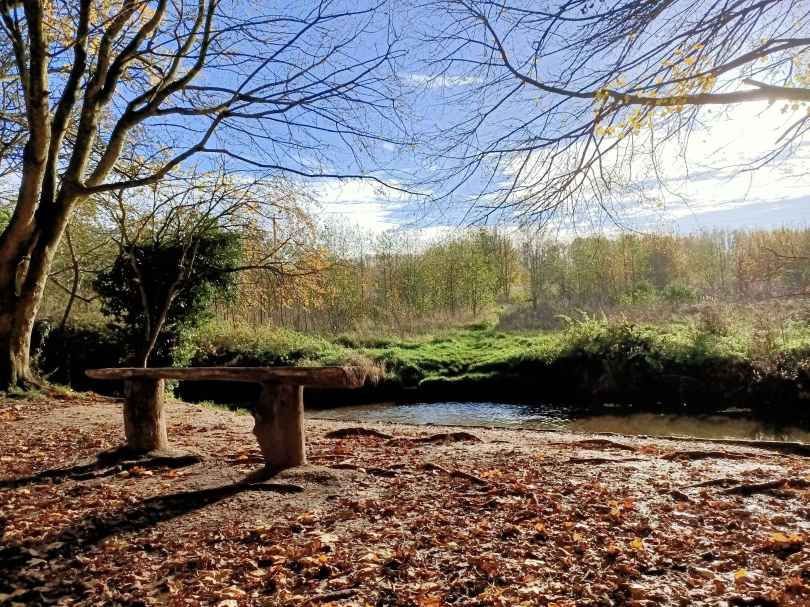
It’s already late September, and it feels like this year has just flown by. Those of us in the northern hemisphere are officially in what Americans consider to be “fall” (Personally, I prefer “autumn”). For Anglo-Saxon heathens and Fyrnsideras that means Winterfylleþ (Oct 17th) is nearly upon us.
What is Winterfylleþ?
Hence they called the month in which the winter season began “Winterfilleth”, a name made up from “winter” and “full Moon”, because winter began on the full Moon of that month.
De temporum ratione (The Reckoning of Time), The Venerable Bede
We know from the Venerable Bede that the Old English word translates to “Winter Full Moon” and that moon marks the beginning of Winter1… and that’s pretty much all he has to say on the subject. As usual, Bede gives us just enough information to whet the appetite and make some inferences.
For me, Winterfylleþ is one of my four “big” holy days, along with Geol, Ēostredæg, and Midsumor. For me, it is a time for both thanksgiving and propitiation. I consider it to be the beginning of the Wild Hunt, which will end around Geol. I don’t really have strong textual evidence for this last assertion, but I think it is thematically fitting. Many other cultures and pagan paths consider this time between summer and winter to be liminal, the connection between the world of the living and the dead stronger. For example, pagans with a more Celtic lean are getting ready to celebrate Samhain. Norse heathens may be gearing up for Alfablot. In Mexico, the Day of the Dead is celebrated on November 1st, and of course, we can’t forget about Halloween and All Saints Day. Seems to be a running theme, no?
Because we have little textual evidence for how the Anglo-Saxons might have celebrated this hinge in the year, I look to comparative traditions to inform my praxis. And so, my Winterfylleþ celebration will be three nights with three parts:
- Welcoming my honored dead and beloved ancestors into my home.
- Saying goodbye to seasonal deities who I will welcome back with summer’s return.
- Offering to the gods with prayers for a safe and comfortable winter.
Welcoming the Honored Dead
This can be accomplished in several ways. I like to make an offering and invite my ancestors to linger in my home before preparing a nice dinner. The offering could be anything, really, but I often offer my ancestors coffee because most of my known ancestors enjoyed it during their lifetimes. I may also offer my grandfather’s favorite cigarettes or some pipe tobacco this year.
Once dinner is prepared, I will then set aside a portion of the meal at an extra place setting as an offering. (If more of my living family were pagan, I would invite them to this dinner as well, but alas, they are not). I am incapable of being quiet, so I don’t do the silent supper I often see suggested for Samhain. Instead, I prefer sharing stories of loved ones who have gone on before. Telling stories and toasting the memories of our beloved dead is a very Anglo-Saxon heathen thing to do, in my opinion.
After dinner, an additional libation offering or dessert offering at the altar may be an excellent choice. For me, this is also a good time to break out my oracle deck and see if my ancestors have anything they’d like to communicate with me. I derive a lot of comfort from these talks.
Saying Goodbye to Seasonal Deities
To me, this is a time to say goodbye to Eorthe for the season as she enters her winter slumber, awaiting Eostre’s return in the spring. This year, I will be placing my representations of them in a special place to “rest” until Hrēþe’s victory over Winter in the new year. This is, of course, largely based on my own UPG and SPG I share with others that suggest Eostre and Eorthe grow quieter in the winter months.
Prayers for a Safe and Comfortable Winter
In our modern world, the harshness of winter often seems softened by electric lights and gas furnaces. However, it doesn’t take much for those luxuries to disappear, if only temporarily. In my part of the world, we’re sometimes one bad storm with blackouts away from freezing. In my mind, it makes sense to make offerings to the gods in hopes that such storms will pass us by and that death stays away for another season.
As previously mentioned, I consider this to be the beginning of the Wild Hunt. Therefore, it is a good time to ask Woden to steer his Hunt away from my door. Frīg is also a major part of my praxis, so I will be asking for her aid in managing my family’s resources well through the winter months. My offerings will consist of grain, wool, whiskey, and incense. It may seem overboard, but as I said, I consider this one of my “big” celebrations.
The gods that you choose to honor for Winterfylleþ may be completely different. Some Norse heathens choose to honor Freyr (Ing in Fyrnsidu) and the elves for Alfablot at this time. Patricia M. Lafayllve’s A Practical Heathen’s Guide to Asatru2 suggests a Winternights ritual honoring the wights, for example.
Final Thoughts
I view Winterfylleþ as a hinge of the year, a beginning and an end. The practices I am building around this holiday reflect this mindset. As time goes by and I grow in my praxis, these things will likely evolve. It will be interesting to look back at this post next year when I’m preparing for the holiday again.
I’d love to hear from you. Do you celebrate Winterfylleþ? Samhain? Something else? Do you have a favorite tradition associated with this time of year? Let me know in the comments!
Photo Credit: Gippe
- The Anglo-Saxons, much like their Norse cousins, recognized two seasons or halves of the year, Summer and Winter. What we think of today as Autumn/Fall and Spring are split between the two. Bede also mentions this before explaining Winterfylleþ. ↩︎
- Chapter 14 https://bookshop.org/p/books/a-practical-heathen-s-guide-to-asatru-patricia-m-lafayllve/8763949?ean=9780738733876 ↩︎
Further Reading
Ancestor Veneration
- Honoring Your Ancestors: A Guide to Ancestor Veneration by Mallorie Vaudoise. The perspective of this book is rather folk Catholic, but I think there’s a lot in here for any pagan looking to start ancestor veneration. If y’all are interested in seeing a full review of this book, let me know.
- Travels Through Middle Earth: The Path of a Saxon Pagan by Alaric Albertsson – Chapter 6.
- Ancestors – Fyrnsidu.Faith A brief overview of ancestor veneration by the Fyrnsidu mod team. Includes a sample prayer.
Winterfylleþ
- Winterfylleð Seolfor Cwylla Heorþ’s take on the holiday.
- The Winter Holidays Minewyrtruman’s summary of the winter holidays, including Winterfylleþ
 Forþ-weard